The Problem With Eating Less
GLP-1 receptor agonists have changed the conversation around weight management. By slowing gastric emptying and reducing appetite signals, they help people eat significantly less — often 30 to 50 percent fewer calories than before. That reduction is intentional. But it comes with a consequence that doesn't get discussed often enough: when total food intake drops, so does protein intake. And that gap matters more than most people realize.
Muscle Loss Is the Silent Side Effect
When your body operates in a sustained caloric deficit without adequate protein, it doesn't wait patiently. It begins pulling amino acids from lean muscle tissue to meet its metabolic demands. The scale moves, but not always in the right direction. Research on GLP-1 users has consistently flagged lean mass loss as a concern, particularly in individuals who aren't actively prioritizing high-quality protein intake.
The issue compounds when you factor in protein source quality. Most conventional protein supplements use fast-absorbing isolates — whey isolate being the most common. These drive a sharp spike in amino acid availability, but that window closes quickly. For someone eating two or three smaller meals a day under appetite suppression, a fast-in, fast-out protein source leaves long gaps where muscle protein synthesis has no substrate to work with.
Nutrient Density Per Calorie Becomes the New Metric
When your caloric ceiling drops, the math changes. Every calorie you consume needs to carry more — more protein, more cofactors, more bioavailability. This is what nutrient density per calorie actually means in practice, and it's why whole-food protein sources behave differently than isolates in a constrained intake environment.
Whole-food protein sources retain naturally occurring enzymes, peptides, and micronutrients that support absorption and utilization. They also digest at different rates depending on their structure — which means amino acids reach the bloodstream across a longer window rather than all at once. For someone eating less frequently, that distribution matters.
How Troprotein Is Designed for This Problem
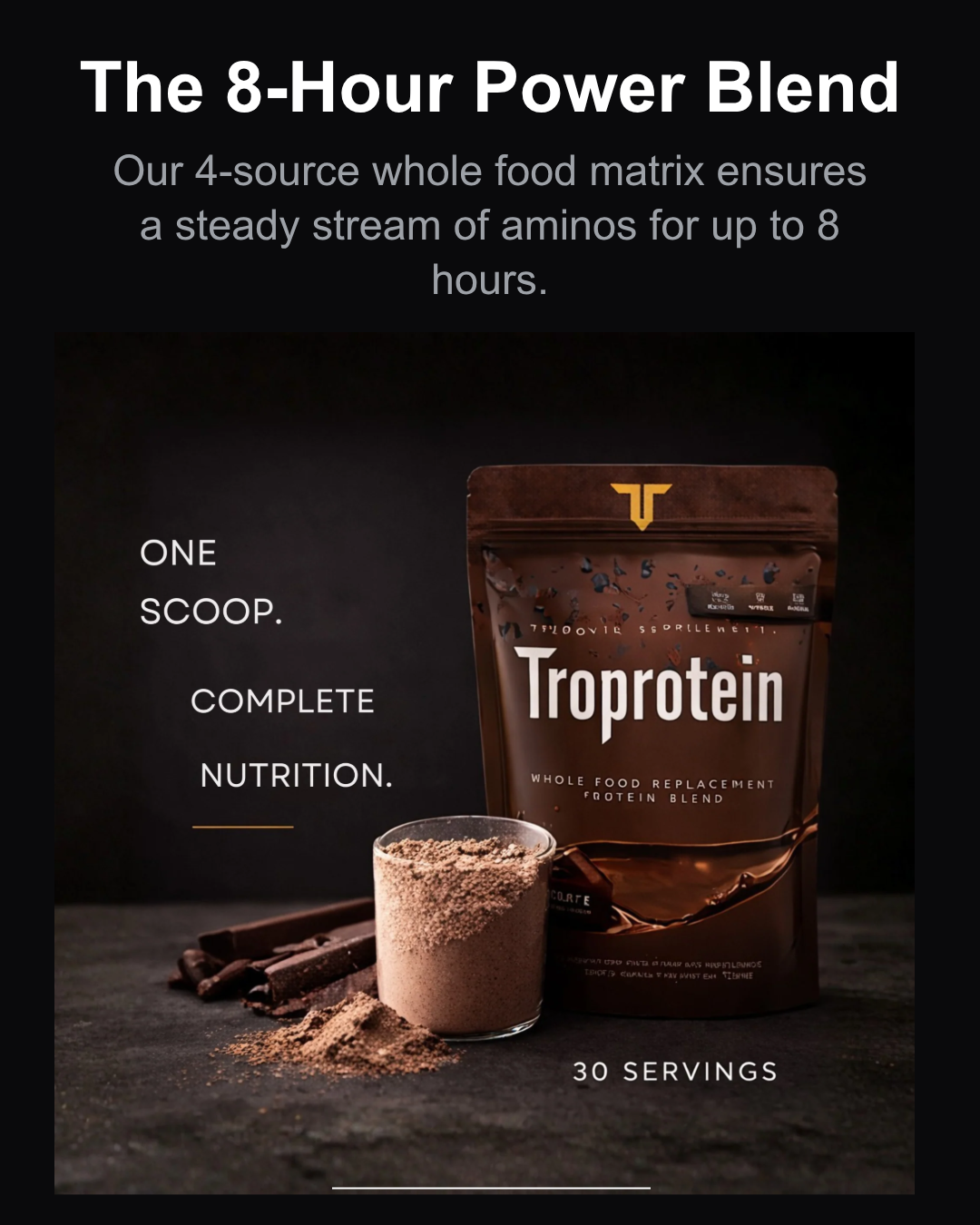
Troprotein is built around a time-release matrix using four whole-food protein sources, each with a distinct absorption profile. The result is sustained amino acid availability across a 4 to 6 hour window — covering the gaps between meals that smaller appetites create, without requiring additional calories to do it.
This isn't about adding more protein to your day. It's about making the protein you do consume work across a longer, more physiologically useful window. For GLP-1 users, high-protein dieters, or anyone operating in a caloric deficit, that distinction is the difference between preserving muscle and losing it.
Learn more about Troprotein and the full formulation at troponinsupplements.com.