The Organ Nobody Thinks About Until It's Too Late
In performance nutrition, the conversation never stops moving — protein timing, creatine loading, electrolyte balance, sleep quality. But one system sits at the center of nearly all of it, quietly doing the most demanding work in your body, and it almost never comes up: your kidneys.
For the average person, kidney health is a background concern. For athletes running high-protein diets, training multiple sessions per day, and cycling performance supplements, it deserves a front-row seat in your protocol.
What High-Output Training Actually Does to Renal Function
Your kidneys filter approximately 200 liters of blood every single day. They regulate fluid balance, clear metabolic waste, manage electrolyte concentrations, and process everything that enters your system — food, supplements, byproducts of muscle breakdown included.
When training volume increases, so does the renal load. Repeated dehydration — even mild, subclinical dehydration across many sessions — reduces blood flow to the kidneys and forces them to work harder to maintain filtration rates. Elevated protein intake increases the production of urea and other nitrogenous waste products that the kidneys must clear. High creatine use, while well-tolerated by healthy kidneys, adds to the filtration demand over time.
None of this means training is damaging your kidneys. But it does mean that athletes exist in a higher-demand category than sedentary individuals — and their supplementation should reflect that.
The Problem With Waiting for Symptoms
Organ health is largely asymptomatic until it isn't. Renal stress doesn't announce itself the way muscle soreness does. You won't feel your kidneys under pressure after a hard training block the way you feel your legs. That invisibility is exactly why most athletes never address it — and why most supplement stacks never account for it.
The logic of preventive organ support is straightforward: if you're going to run a high-performance engine harder than average, the maintenance schedule should match the workload. Waiting for dysfunction is not a strategy.
What Renal Reset Is Built to Do
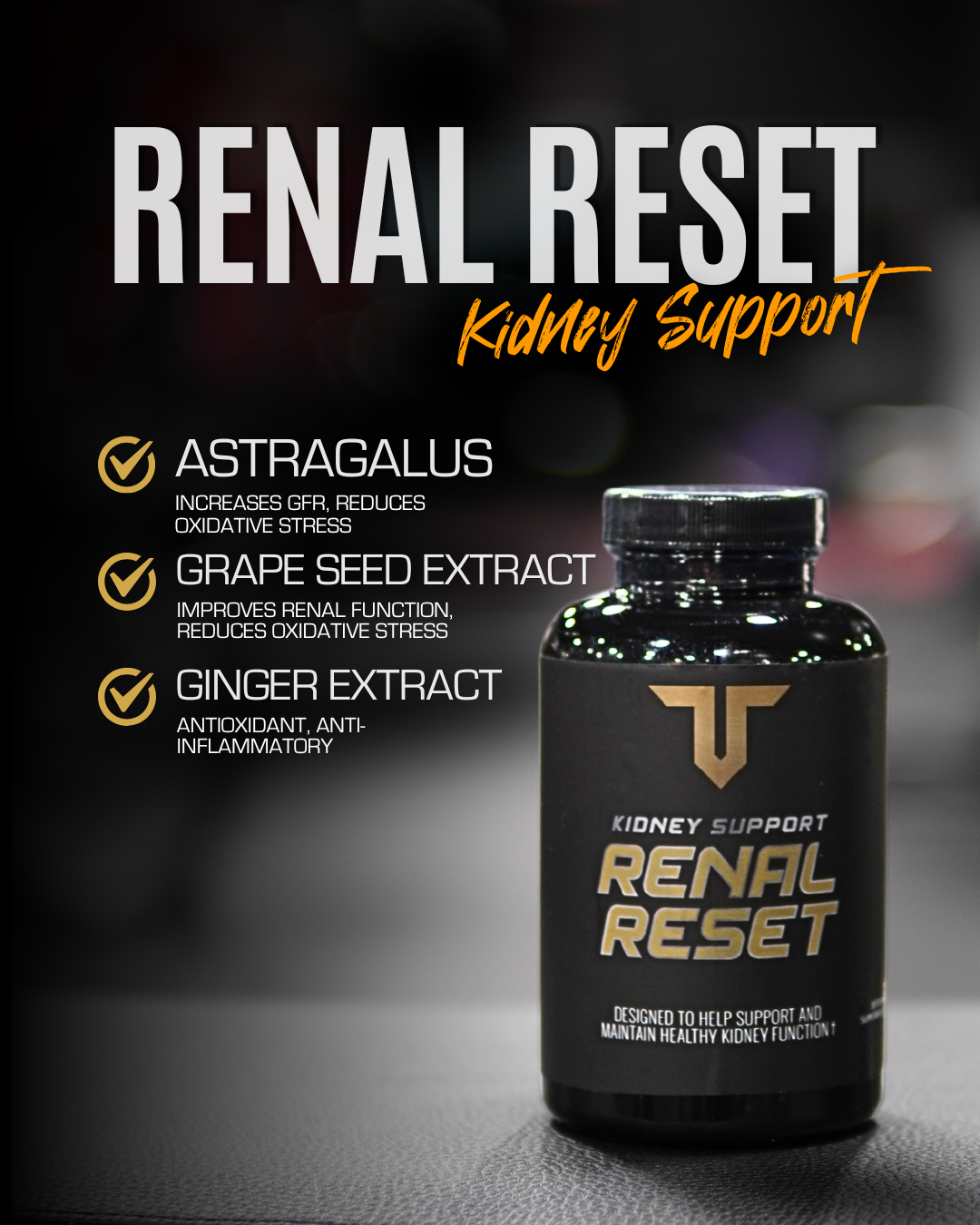
Renal Reset was formulated for athletes who actually stress their kidneys — not as a corrective measure, but as a proactive one. The formula is designed to support filtration efficiency, reduce oxidative stress on renal tissue, and help the body manage the increased metabolic burden that comes with serious training.
This isn't a product for people with kidney disease. It's a product for healthy, high-output athletes who understand that long-term performance depends on long-term organ function.
Your training is built for the long game. Your organ support should be too.